Bamboo Carbonization Process Explained: A Practical Guide for Sustainable Product Brands
As consumers move toward plastic-free lifestyles and more thoughtful, eco-friendly products, bamboo has become one of the most attractive materials for modern brands. But behind every premium bamboo tray, tea box, kitchen accessory, or gift set is an important manufacturing step many buyers overlook: bamboo carbonization. This guide explains how the bamboo carbonization process works, why bamboo treatment matters, and what wholesale buyers should know before developing custom bamboo products.
What Is Bamboo Carbonization?
Bamboo carbonization is a controlled heat and steam treatment process used to change the color, stability, and performance characteristics of bamboo. In simple terms, bamboo is exposed to high-temperature steam under controlled conditions. This process darkens the natural bamboo tone, reduces some sugars and nutrients inside the material, and helps create a warmer, richer look that many premium brands prefer.
For small business buyers, Shopify brands, Amazon sellers, and eco lifestyle companies, bamboo carbonization is not only a technical production step. It directly affects product appearance, mold resistance, durability, packaging presentation, and the overall brand story. A well-treated bamboo product feels more refined, looks more consistent, and supports a stronger sustainability message than generic low-cost bamboo items.
Key point: Bamboo carbonization is different from simply staining bamboo. Staining is a surface finish. Carbonization changes the bamboo through heat treatment, creating a deeper natural tone and improving material stability when done correctly.
Carbonized bamboo is often associated with elegant brown, honey, amber, or coffee-like tones. These colors work especially well for eco gift products, bamboo tea boxes, bamboo trays, bathroom accessories, kitchenware, and premium packaging components. For brands that want a more mature, organic, and natural visual identity, carbonized bamboo can feel less raw and more elevated than pale unfinished bamboo.
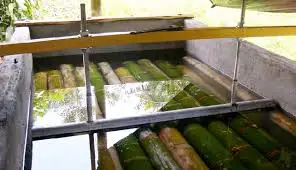
Image reference: bamboo treatment process visual, used to illustrate material preparation and treatment concepts.
Why Bamboo Treatment Matters for Eco-Friendly Products
Bamboo grows quickly, has a beautiful natural grain, and is widely used as an alternative to plastic, wood, and disposable packaging materials. However, raw bamboo is still a natural material. Without proper bamboo treatment, it can be more sensitive to moisture, temperature changes, and mold risk during storage or shipping.
This is why serious bamboo manufacturers do not treat bamboo as a simple commodity. For export-ready products, the manufacturing process must consider material selection, drying, carbonization, mold prevention, sanding, sealing, finishing, quality inspection, and packaging. Each step protects the final product and helps brands avoid customer complaints.
Buyer Pain Points That Bamboo Treatment Helps Solve
Mold during shipping: Bamboo products may travel through humid ports, warehouses, and long sea freight routes. Proper drying and treatment reduce risk.
Inconsistent color: Controlled bamboo carbonization helps create a more unified color tone across batches.
Warping or cracking: Good moisture control and stable processing improve product performance.
Poor brand presentation: Premium treatment creates a smoother, more refined finish that suits boutique retail and gift markets.
Unclear compliance expectations: Export buyers often need suppliers who understand FSC certification, packaging requirements, and product testing expectations.
For growing brands, these details matter because a product is not judged only by material. It is judged by what customers experience when they open the package, touch the surface, use the item, and decide whether it feels worth the price.
How the Bamboo Carbonization Process Works
The exact bamboo carbonization process may vary by factory, product type, and required color depth. However, the general workflow usually includes the following stages.
1. Bamboo Selection
The process begins with selecting suitable bamboo material. Mature bamboo is preferred because it offers better density, strength, and stability. For products such as bamboo trays, tea boxes, cutting boards, packaging boxes, or home accessories, material consistency is essential. A reliable supplier will sort bamboo by grade, color, grain, and intended use.
2. Cutting and Initial Preparation
Bamboo culms are cut into strips, panels, boards, or components depending on the final product. At this stage, obvious defects are removed. The bamboo may be split, planed, laminated, or shaped before deeper processing. For custom bamboo products, this is also where engineering requirements begin to matter: thickness, product dimensions, load-bearing needs, and assembly structure should be considered before production begins.
3. Drying and Moisture Control
Moisture control is one of the most important parts of bamboo treatment. If the moisture content is too high, products may develop mold, odor, warping, or cracking after packaging. Proper drying helps stabilize the bamboo and prepares it for carbonization. For export orders, moisture control is especially important because products may spend weeks in cartons, containers, or warehouses.
4. Steam Carbonization
During carbonization, bamboo is exposed to controlled heat and steam. The high temperature changes the internal color of the bamboo and creates a warm brown tone. The longer or more intense the treatment, the darker the color may become. However, professional factories balance color with strength. Excessive heat may affect material performance, so the process must be controlled carefully.
5. Cooling and Conditioning
After carbonization, bamboo needs to cool and condition before further processing. This stage helps the material settle and reduces stress caused by temperature changes. Skipping or rushing this step can create quality issues later in cutting, sanding, or assembly.
6. Sanding, Shaping, and Surface Finishing
Once the carbonized bamboo is stable, it is sanded and shaped to meet product requirements. Surface finish depends on the product category. A bamboo tray may need a smooth hand-feel and food-contact-friendly finish. A tea box may require precise edges, hinges, and a polished lid. Bamboo packaging may need laser engraving, color logo printing, or a protective coating.
7. Mold Prevention and Quality Inspection
Reliable bamboo treatment includes preventive measures against mold, especially for export and wholesale storage. This may include controlled drying, clean storage, suitable packaging, desiccants, and product inspection before shipment. A responsible manufacturer should be able to discuss how it controls humidity, packaging ventilation, and carton conditions.
8. Custom Branding and Final Packaging
For OEM and private label buyers, bamboo carbonization is only one part of the product journey. The final commercial value often comes from custom branding: logo engraving, printed packaging, kraft paper sleeves, gift boxes, hang tags, barcode stickers, Amazon FBA labeling, or Shopify-ready packaging. Kunknot supports growing brands that need flexible bamboo product development, low MOQ sourcing, and brand-focused packaging solutions.
Bamboo vs Plastic: Why Brands Are Making the Switch
Plastic has been used for decades because it is cheap, lightweight, and easy to shape. But modern consumers are increasingly aware of plastic waste, disposable packaging, and the environmental impact of short-life products. Many buyers now actively look for sustainable alternatives that feel natural, reusable, and emotionally connected to a healthier lifestyle.
This shift is especially visible in eco lifestyle retail, gift products, kitchenware, boutique home goods, and premium packaging. Consumers do not simply want an item that functions. They want products that align with their values. Bamboo gives brands a way to communicate warmth, responsibility, and quality in a single material.
From a carbon footprint perspective, bamboo can also support a lower-impact product strategy when it is responsibly sourced, efficiently manufactured, and shipped with thoughtful packaging. Bamboo grows rapidly, can be harvested without the same long growth cycle required by many hardwoods, and helps brands reduce dependence on petroleum-based plastic. For buyers, the advantage is not only environmental; it is commercial. A product line built around renewable bamboo sourcing, plastic-free packaging, and durable, reusable design gives customers a clearer reason to choose your brand.
Factor
Bamboo Products
Plastic Products
Brand perception
Natural, premium, eco-conscious, giftable
Often seen as disposable or low-value
Sustainability story
Renewable bamboo sourcing, plastic-free lifestyle appeal, and biodegradable material potential
Connected with waste concerns and long-term environmental burden
Customization
Laser engraving, logo printing, custom shapes, gift packaging, private label options
Highly customizable but less emotionally premium for eco brands
Retail value
Suitable for boutique pricing, sustainable gift sets, and premium home collections
Often competes mainly on price
Challenges
Requires good bamboo treatment, moisture control, quality inspection, and reliable packaging
Material is stable but may conflict with eco-branding goals
For Amazon sellers, bamboo can help differentiate products in crowded categories. For Shopify store owners, it supports storytelling, landing page visuals, and higher perceived value. For wholesalers and boutique retailers, bamboo products can fit seasonal gift collections, eco home displays, and private label ranges.
Branding Benefits of Carbonized Bamboo
Carbonized bamboo offers more than a color change. It creates a visual language that feels warm, refined, and intentional. This matters because sustainable products must still be beautiful. Buyers may care about the environment, but they also want products that look good in their kitchens, homes, stores, and gift boxes.
A More Premium Natural Aesthetic
The darker tone of carbonized bamboo often feels more mature than pale bamboo. It pairs well with kraft packaging, minimalist labels, cotton drawstring bags, recycled paper sleeves, and earthy brand palettes. For eco lifestyle brands, this creates a consistent look from product to packaging.
Better Storytelling for Sustainable Products
Consumers respond to stories. A bamboo product is not only a tray, tea box, utensil holder, or packaging insert. It is part of a larger movement toward mindful consumption. When brands explain bamboo treatment, renewable bamboo sourcing, and plastic-free product design, they create trust and emotional value.
Suitable for Private Label and Gift Markets
Carbonized bamboo works well for corporate gifts, boutique retail sets, wellness brands, tea brands, eco subscription boxes, and sustainable startup product lines. Logo engraving looks especially elegant on darker bamboo tones, giving small businesses a premium branded look without needing very high order volumes.
Image reference: premium bamboo products for eco lifestyle branding, wholesale, and custom product development.
Popular Bamboo Products for Modern Brands
Carbonized bamboo and treated bamboo can be used across many product categories. The best choice depends on your market, price point, packaging concept, and logistics requirements.
Bamboo kitchenware remains one of the strongest categories for eco-conscious consumers. Products such as utensil sets, cutting boards, organizers, serving boards, spice racks, and storage accessories can support a natural kitchen lifestyle. For Amazon sellers, durability, finish quality, packaging, and customer review risk should be considered early in development.
Bamboo Packaging
Bamboo packaging is increasingly attractive for beauty brands, tea brands, wellness products, luxury gift sets, and sustainable startups. Bamboo boxes, lids, trays, inserts, and display packaging can transform a simple product into a premium gift experience. For private label buyers, packaging is often where brand value becomes visible.
Bamboo trays are versatile for home, hospitality, tea service, bathroom storage, gifting, and retail display. Carbonized bamboo trays can create a warmer and more premium appearance, especially when paired with engraved logos or custom packaging sleeves.
Tea culture fits naturally with bamboo. Bamboo tea boxes, tea trays, and organizer boxes can appeal to wellness brands, boutique retailers, gift companies, and hospitality buyers. Carbonized bamboo adds a timeless feel that works well with premium tea packaging and natural brand identities.
Eco Gift Products
Eco gift products are ideal for small businesses because they combine emotional value with practical use. Bamboo desk accessories, self-care packaging, home storage, candle lids, soap dishes, gift boxes, and lifestyle sets can all be customized for seasonal campaigns, corporate gifting, and boutique collections.
Challenges Brands Face When Switching to Bamboo
Switching from plastic to bamboo can strengthen your brand, but it also introduces new sourcing questions. Natural materials require a more thoughtful development process. The right supplier should help you solve these issues before production, not after customer complaints appear.
Challenge 1: Mold Prevention
Mold prevention is one of the biggest concerns for bamboo products. Brands should ask suppliers about drying control, carbonization, storage conditions, packaging ventilation, desiccant use, and pre-shipment inspection. Products should not be packed while the moisture is still unstable.
Challenge 2: Consistent Color Across Batches
Bamboo is natural, so some variation is expected. However, excessive color difference may make products look inconsistent in retail or online listings. A professional manufacturer should define acceptable color ranges and communicate realistic expectations before mass production.
Challenge 3: Low MOQ Sourcing
Many growing brands need low MOQ options because they are testing a new product, launching a Shopify store, or building an Amazon listing. The challenge is finding a supplier that can support smaller orders while still offering stable quality, custom branding, and export-ready packaging. Kunknot focuses on flexible OEM solutions for growing businesses that need practical entry points into bamboo product development.
Challenge 4: Customization Without Overcomplication
Custom bamboo products can include size changes, logo engraving, color finishing, packaging design, accessory combinations, and private label branding. But too much customization too early can increase cost and lead time. A good supplier helps you prioritize what matters most for sales: product function, perceived value, packaging, and brand presentation.
Challenge 5: Quality Control
Quality control should cover dimensions, moisture, surface finish, glue lines, edges, odor, packaging strength, logo placement, and carton labeling. For Amazon sellers, this is especially important because small defects can quickly affect reviews. For wholesalers, consistency matters because retail buyers expect repeatable batches.
Challenge 6: FSC Certification and Responsible Sourcing
For many eco lifestyle brands, FSC certification and responsible sourcing are important parts of the purchasing conversation. Buyers should confirm certification availability, documentation requirements, and whether certification is needed for their product category or retail channel. Even when certification is not mandatory, transparent sourcing builds trust.
How to Choose a Reliable Bamboo Supplier
A reliable bamboo supplier should understand both production and branding. The best partner is not simply the cheapest factory. It is the manufacturer that can help you create a product that looks good, performs well, ships safely, and fits your business model.
Ask These Questions Before Placing an Order
What bamboo treatment process do you use for this product?
Is bamboo carbonization recommended for my product design?
How do you control moisture and reduce mold risk?
Can you support low MOQ for trial orders or new brand launches?
What OEM/ODM customization options are available?
Can you provide logo engraving, private label packaging, or gift box solutions?
Do you support FSC certification or related documentation if required?
How do you inspect quality before shipment?
Can packaging be optimized for Amazon FBA, Shopify fulfillment, or wholesale cartons?
What Makes Kunknot a Practical Partner for Growing Brands
Kunknot works with global small businesses, Shopify brands, Amazon sellers, eco lifestyle brands, boutique retailers, gift brands, and wholesale buyers that want premium bamboo products without unnecessary complexity. For many growing brands, the ideal supplier is one that can combine low MOQ sourcing, OEM customization, private label support, packaging solutions, and export-friendly quality control.
Instead of treating bamboo products as generic catalog items, Kunknot helps buyers think through material choice, carbonization style, surface finish, mold prevention, logo application, packaging format, and retail positioning. This is especially valuable for brands that want to move away from plastic but still need products that feel polished, practical, and commercially ready.
Practical sourcing tip: If you are launching a new bamboo product, start with a core bestseller format, customize the logo and packaging first, then develop deeper structural customization after market validation. This approach helps reduce risk while still giving your brand a premium identity.
Future Trends: Bamboo, Eco Branding, and Plastic-Free Lifestyles
The future of bamboo products is closely tied to the future of sustainable consumer behavior. Consumers are not only buying individual items; they are building lifestyles around lower waste, natural materials, better packaging, and more intentional gifting. This creates opportunities for brands that can combine function, design, and environmental responsibility.
Plastic-free lifestyle trends are expected to keep influencing kitchenware, bathroom products, packaging, gift sets, home organization, hospitality supplies, and retail displays. Bamboo is well-positioned because it offers a natural look, renewable sourcing potential, premium texture, and broad customization possibilities.
For small businesses, the opportunity is not to copy generic bamboo products. The opportunity is to create a distinctive product story: carefully treated bamboo, elegant carbonized tones, thoughtful packaging, low-waste branding, and a clear reason for customers to choose your product over plastic alternatives.
FAQ: Bamboo Carbonization, Bamboo Treatment, and Custom Bamboo Products
1. Is bamboo better than plastic for eco-friendly brands?
Bamboo can be a stronger fit for eco-friendly brands because it is natural, renewable, visually premium, and aligned with plastic-free lifestyle trends. Plastic may be cheaper and highly stable, but it often weakens a brand's sustainability message. For gift, home, kitchen, and lifestyle products, bamboo can create higher perceived value.
2. What is bamboo carbonization?
Bamboo carbonization is a heat and steam treatment process that darkens bamboo and improves material stability when properly controlled. It creates warm brown tones and is commonly used for bamboo products that need a more premium natural appearance.
3. Does bamboo carbonization prevent mold?
Carbonization can help reduce some internal nutrients and improve stability, but mold prevention also depends on proper drying, storage, packaging, humidity control, and inspection. Brands should not rely on carbonization alone. A full bamboo treatment and packaging strategy is more reliable.
4. Are bamboo products biodegradable?
Bamboo itself is a natural material with biodegradable potential, but the final product depends on coatings, adhesives, finishes, labels, and packaging components. If biodegradability is important for your brand, discuss material and finish choices with your supplier before production.
5. Can Kunknot make custom bamboo products with low MOQ?
Yes. Kunknot supports growing businesses with flexible OEM and private label bamboo product solutions. Low MOQ options depend on product complexity, customization level, packaging requirements, and material availability. Simple logo and packaging customization usually offers a more accessible starting point.
6. What bamboo products are best for Shopify and Amazon sellers?
Popular options include bamboo kitchenware, trays, tea boxes, packaging boxes, organizers, gift products, bathroom accessories, and eco lifestyle sets. The best choice depends on your niche, target price, shipping size, differentiation strategy, and review risk.
7. Can bamboo products use eco-friendly packaging?
Yes. Bamboo products pair well with kraft boxes, recycled paper sleeves, paper labels, cotton bags, minimal plastic-free packaging, and branded gift boxes. Packaging can be designed for wholesale, Shopify fulfillment, boutique retail, or Amazon FBA requirements.
8. Is bamboo durable enough for daily use?
Properly selected, treated, dried, and finished bamboo can be durable for many daily-use products. Durability depends on product design, construction, thickness, coating, usage environment, and care instructions. A reliable supplier should help match the bamboo treatment to the product's intended use.
The bamboo carbonization process is an important part of creating premium bamboo products. It enhances the natural color of bamboo, supports material stability, and gives products a warm, elevated look that fits modern eco branding. For brands moving away from plastic, bamboo offers a powerful combination of sustainability advantages, visual appeal, customization potential, and emotional storytelling.
However, successful bamboo sourcing requires more than choosing a beautiful material. Buyers need to understand bamboo treatment, mold prevention, moisture control, FSC certification options, quality control, packaging solutions, and MOQ flexibility. These details determine whether a bamboo product becomes a customer favorite or a sourcing problem.
As consumers continue to prefer eco-friendly products and plastic-free lifestyles, bamboo will remain a strong material for kitchenware, packaging, trays, tea boxes, gift products, and lifestyle collections. Brands that invest in thoughtful design, responsible sourcing, and reliable manufacturing will be better positioned for the next wave of sustainable retail.
Looking for Low MOQ Custom Bamboo Products for Your Brand?
Kunknot helps growing businesses create sustainable bamboo products with flexible OEM solutions, private label support, custom branding, bamboo treatment expertise, and global wholesale support. Whether you are developing bamboo kitchenware, bamboo packaging, bamboo trays, bamboo tea boxes, or eco gift products, our team can help you turn a sustainable product idea into a market-ready collection.
Request samples, explore custom bamboo products, or discuss your next OEM/private label project with Kunknot.
Q1: How can I place a wholesale order with customization?
A: To place a wholesale order with customization, simply provide the following details:
Product type and quantity
Design preferences (e.g., logo, size, special features)
Shipping destination
Once we receive your information, our team will offer a tailored quote and timeline for your customized bamboo products.
Q2: Can you customize wholesale products?
A: Yes, we offer customization for products like bamboo rolling trays, matcha whisks, and laundry baskets, including logo printing, size adjustments, and special designs.
Q3: What’s the minimum order quantity (MOQ)?
A: Our MOQ varies by product and customization. We offer flexible options for different order sizes. Contact us for specific details.
Q4: How do I get pricing for bulk orders?
A: Send us your order details, including quantity and customizations, and we’ll provide a competitive quote for your bamboo products.
Q5: What is the lead time for custom orders?
A: Lead time typically ranges from 15 to 30 days, depending on your order size and customizations. We’ll confirm the timeline once your order is placed.
Q6: Do you offer bulk discounts?
A: Yes, we offer bulk discounts. The more you order, the better the pricing. Contact us for a personalized quote.
Q7: Do you accept small quantity orders for wholesale?
A: Yes, we accept small quantity wholesale orders. Whether you’re a small business or need smaller batches, we can accommodate your needs with flexible MOQ options.
Q8: Where do you ship your wholesale orders?
A: We ship worldwide. No matter where you're located, we offer international shipping with reliable delivery options.
Q9: What is your delivery method for wholesale orders?
A: We offer various delivery methods, including air freight, sea freight, and express shipping, depending on your location and order size. We’ll help you choose the best option for your business.

0 comments